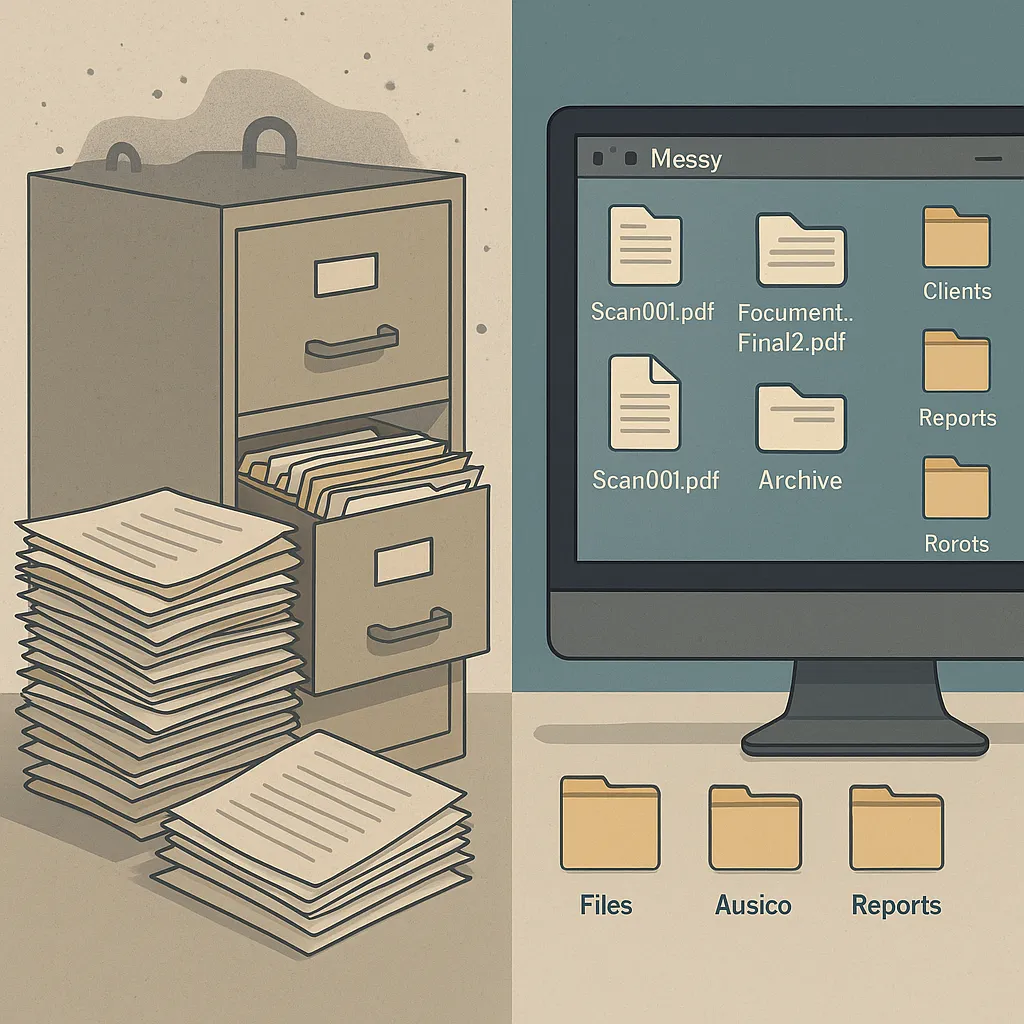
Digital Dust vs. Paper Dust: Which Is Costing Your Company More?
By: USA IMAGING, Inc.
Every office has dust—sometimes on the filing cabinets, sometimes in the server folders. But which one is more costly to your business: the paper dust from boxes of physical files, or the digital dust from poorly organized scanned documents?
The answer: both can hurt your bottom line—just in different ways.
Paper Dust: The Visible Cost
We’ve all seen it: dusty boxes in storage units, old file cabinets crammed with folders, and binders sitting untouched for years.
The costs of “paper dust” include:
Storage Fees – Monthly payments for offsite units or dedicated storage rooms.
Lost Productivity – Employees waste hours searching for missing or misfiled records.
Physical Risks – Mold, pests, and water damage silently destroy important documents.
Compliance Fines – Inability to retrieve required records during audits can trigger penalties.
Paper dust is a physical reminder that information is locked away, inaccessible when you need it most.
Digital Dust: The Hidden Cost
Scanning solves the paper problem—but if digital files are dumped into a server without structure, you’ve simply created “digital dust.”
Signs of digital dust:
Random filenames like Scan001.pdf or Document_Final2.pdf.
Entire folders labeled “Misc” or “Archive”.
No indexing, metadata, or search tools.
Employees emailing files back and forth, creating duplicates and confusion.
The result? Digital clutter slows searches, wastes time, and leaves you just as frustrated as digging through a file box.
The True Cost Comparison

Both forms of dust cost money—just in different disguises.
The Solution: Scan Smart, Not Just Scan Fast
At USA IMAGING, Inc., we believe scanning is only the first step. The real value comes from:
Indexing files with client, date, and project metadata.
Consistent Naming Conventions that make sense to your staff.
OCR Technology to make text searchable.
Secure Repositories with role-based access.
This way, your records don’t just become digital—they become useful.
From Dust to Data
Whether it’s the paper dust on filing cabinets or the digital dust in neglected folders, both represent lost efficiency and hidden costs.
The good news? With the right scanning strategy, you can eliminate both—turning clutter into clarity, and dust into data.


