What Is the Best Way to Organize Scanned Documents?
What Is the Best Way to Organize Scanned Documents?
By USA IMAGING, Inc.
As more businesses transition to a paperless workflow, organizing scanned documents efficiently has become essential. Whether you're digitizing a few cabinets or an entire archive, how you structure and store those files can make a significant difference in how easily they’re retrieved, shared, and secured.
At USA IMAGING, Inc., we’ve supported organizations of all sizes in streamlining their digital records. Below are the best practices for organizing scanned documents effectively:
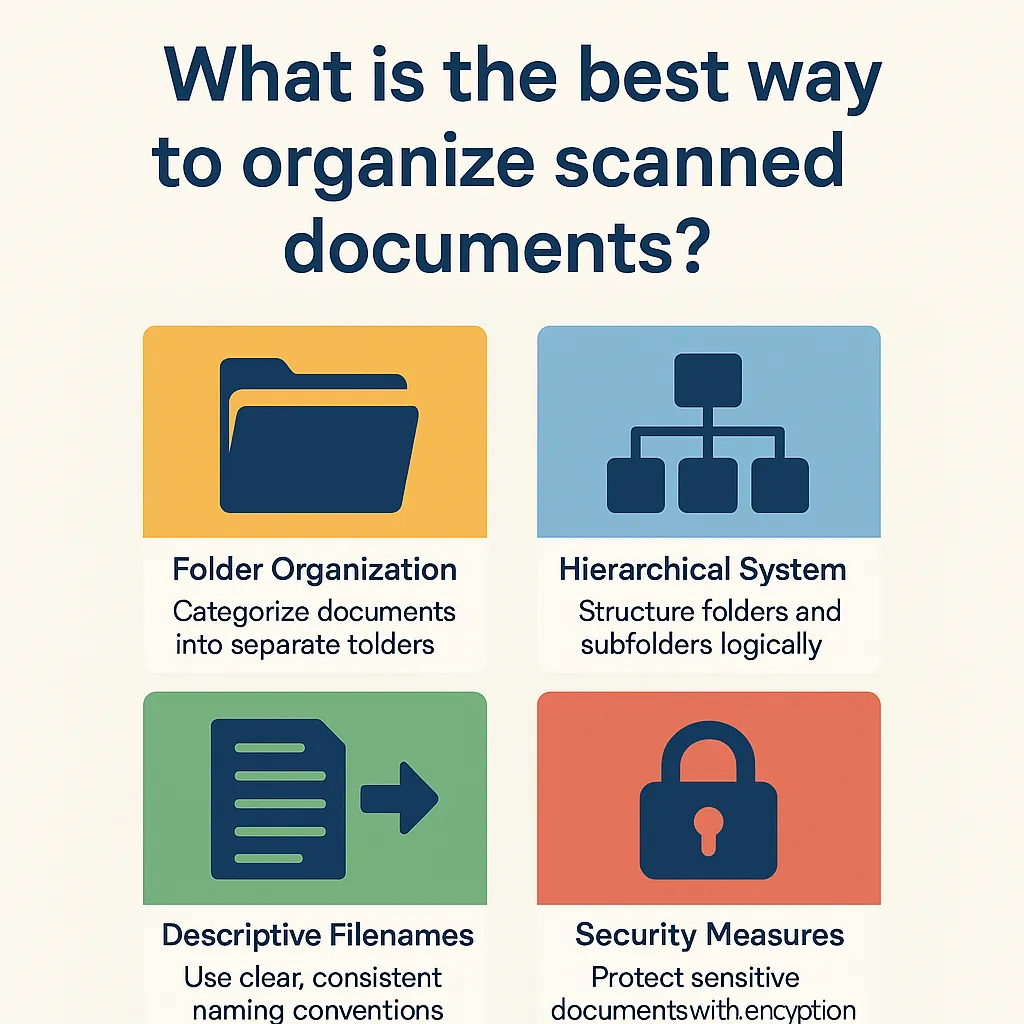
Folder Organization
Begin by creating clearly labeled folders that reflect your document types, departments, or projects. This foundational structure makes navigation easier and reduces search time.
Hierarchical Structure
Build a layered folder system. Subfolders should follow a logical flow—such as by year, department, or client—mirroring how your team typically accesses information.
Descriptive File Naming
Use consistent and informative file names. Avoid generic titles like “scan001.pdf.” Instead, incorporate dates, names, and document types to make files easily identifiable.
Searchable Indexing
Apply OCR (Optical Character Recognition) to make documents text-searchable. This is a valuable step when working with large volumes of files, allowing users to locate content with keywords.
Security Measures
Store documents in a secure, encrypted environment. Implement user-based access controls and utilize cloud-based systems with reliable backup and disaster recovery protocols.
Keep It Simple and Consistent
The best systems are easy to understand and use. Avoid over-complicating your folder structure or naming conventions. Consistency is key—train your team on the system and maintain clear standards.
Need help digitizing and organizing your records?
USA IMAGING, Inc. offers tailored document scanning and digital organization solutions. Contact us today to request a quote or schedule a free consultation.


